Love Letters To Me feels less like an album and more like a conversation Duane Harden has been waiting years to have with himself. Known for shaping some of house music’s most enduring anthems, the Grammy-nominated songwriter and producer makes a striking left turn here, partnering with the enigmatic Soul Healer to create a project rooted in emotional truth rather than dancefloor urgency.
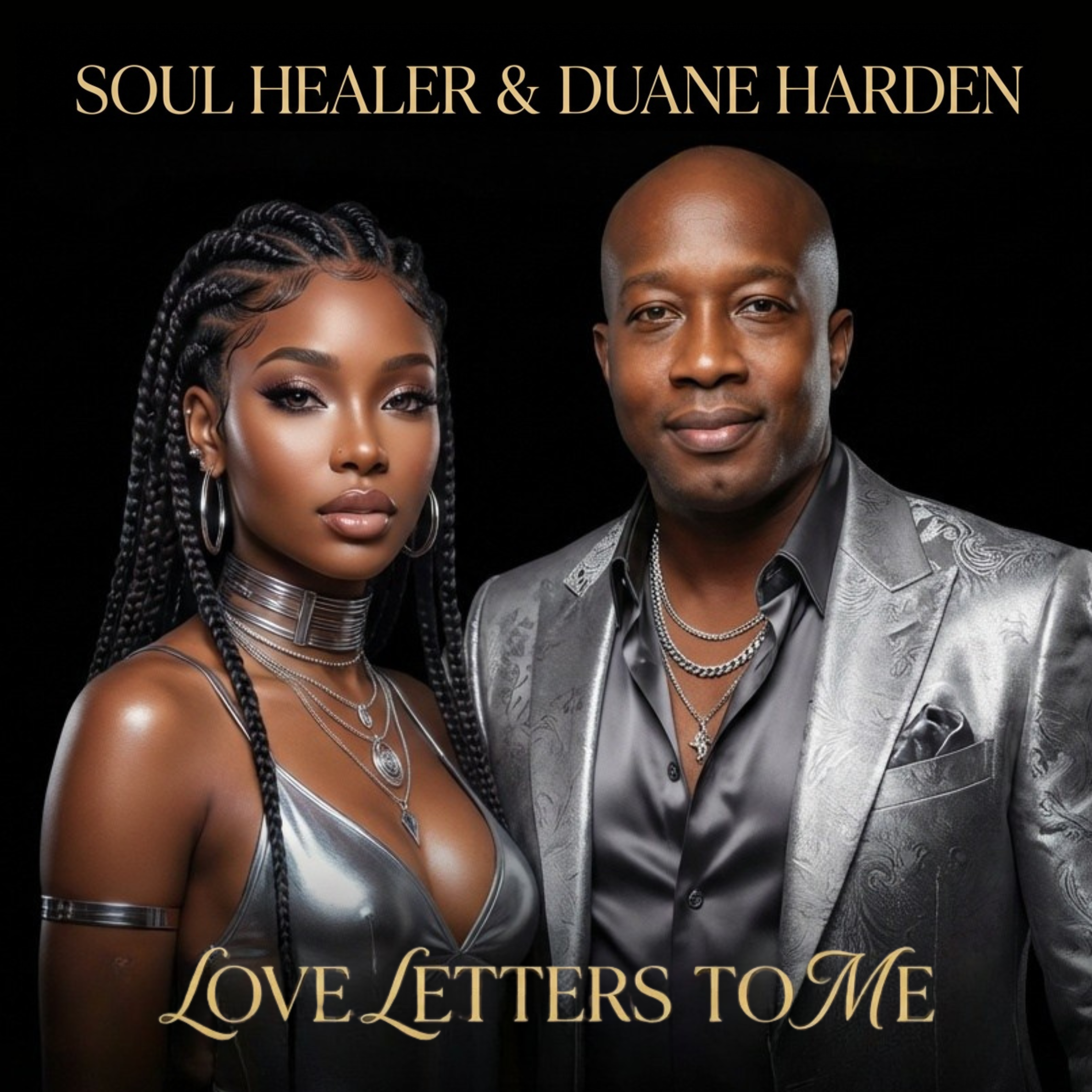
This is not nostalgia, and it’s certainly not club music. Instead, Love Letters To Me unfolds as a carefully paced journey through heartbreak, self-interrogation, and ultimately, self-respect. The album opens with the atmospheric “Intro (Love Letters To Me)”, setting a reflective tone that carries through the record like a quiet promise. From there, tracks like “Apologize” and “Tears Don’t Mean I’m Yours” confront toxic love patterns head-on, refusing to romanticize pain or excuse emotional neglect. What makes the album resonate so deeply is its restraint. The production leans into smooth modern R&B and emotive pop, built on haunting keys, pulsing basslines, and warm, layered harmonies that leave space for the emotions to breathe. Soul Healer’s presence—described by Harden as a “boundless vessel”—feels intentional and symbolic, allowing the music to exist beyond ego and into something more universal.
As the album progresses, the narrative subtly shifts. Songs like “Leaving You Was Loving Me,” “Still Choosing Me,” and “Nothing Better Than Me” mark a turning point, where grief gives way to clarity. There’s power in how unforced this transformation feels; healing isn’t rushed, and self-love isn’t presented as a slogan, but as a decision reached through experience. By the time Love Letters To Me closes, the listener is left with a sense of quiet triumph. It’s an album that doesn’t ask for validation—it offers understanding. In stepping beyond his established legacy, Duane Harden has crafted something braver than reinvention: a record that listens as much as it speaks. Love Letters To Me stands as a soulful reminder that sometimes the most radical love story is the one you write to yourself.
 English